2026-10-24 ·
How Often To Change HVAC Filters Near Salt Water
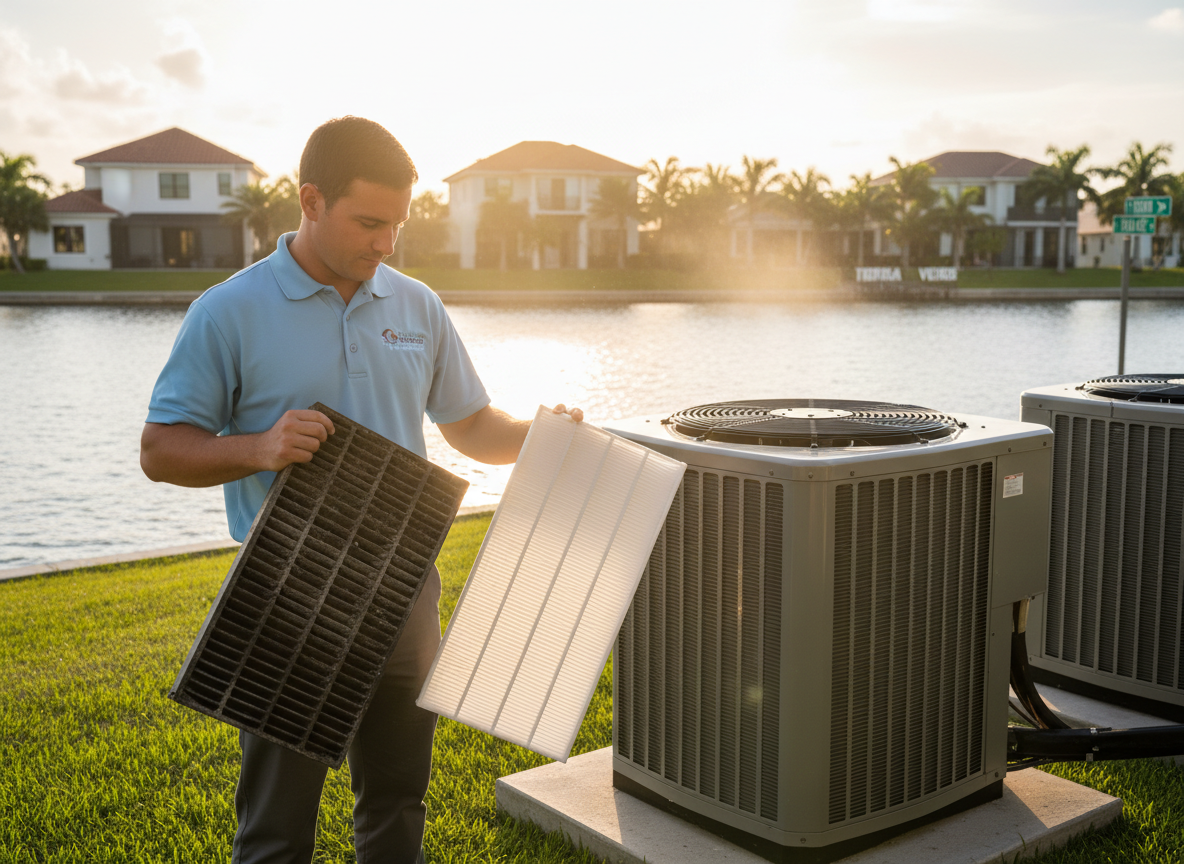
In Tierra Verde homes near salt water, change HVAC filters every 30-45 days. The combination of high humidity and airborne salt particles loads filters faster than inland locations, cutting standard 90-day intervals in half for most systems.
Why Salt Air Accelerates Filter Loading
Tierra Verde sits directly on the Gulf with constant exposure to salt spray carried inland on prevailing winds. This salt mixes with the area's persistent moisture, creating a sticky film that clings to filter media and reduces airflow more quickly than dust alone. Homes along the Pinellas Bayway and nearby channels see even heavier loading because wind funnels through the water. Standard fiberglass filters can reach capacity in under a month during peak summer humidity, while pleated filters last closer to 45 days before static pressure rises. The result is reduced cooling capacity and higher energy use on the same equipment that runs fine farther inland.
Recommended Change Intervals for Local Homes
Track changes by calendar rather than relying on the filter's printed date. Replace every 30 days from May through October when humidity peaks, then stretch to 45 days in cooler months. Homes in Isla Del Sol and Shell Key often need the shorter end of that range because they sit lower and receive more direct salt deposition. Keep a simple log noting the date and condition of the removed filter; after two seasons you will see the exact pattern for your address. Pair this schedule with hvac maintenance visits so technicians can confirm airflow readings match the filter condition.
Visible Signs Filters Are Ready for Replacement
Check the filter monthly by removing it and holding it to a bright light. If light is blocked across more than half the surface, swap it regardless of the calendar. Gray or brownish discoloration combined with a gritty feel indicates salt accumulation typical of Tierra Verde. You may also notice the system running longer to reach set temperature or weaker airflow from vents. These symptoms appear earlier in homes near Fort De Soto because prevailing breezes carry heavier salt loads across the water.
How Salt Exposure Affects Overall System Performance
A clogged filter forces the blower to work harder, raising operating temperatures inside the air handler and shortening component life. In coastal Pinellas County this extra strain compounds the natural corrosion already attacking coils and cabinets. Keeping filters on the 30-45 day schedule maintains design airflow, reduces humidity inside the home, and limits the amount of salt that reaches the evaporator coil. Readers dealing with related humidity issues can find more detail in Managing High Humidity With Your HVAC In Pinellas County.
Practical Steps for Consistent Filter Care
Buy filters in bulk sized to your exact return grille and store them in a sealed bag to keep out additional dust. Mark replacement dates on a wall calendar near the air handler. When changing the filter, note any unusual debris such as fine sand or shell fragments that signal heavier salt exposure from recent storms. If you ever see water stains around the filter slot, schedule a service call because moisture combined with salt accelerates corrosion on the blower motor. These small habits keep systems running reliably through the long cooling season without surprise breakdowns.